

During the July 30 workshop, the Leander ISD Board of Trustees continued its discussion about the district’s facility needs and financial outlook, reviewing recommendations from the Citizens’ Facility Advisory Committee (CFAC) and exploring the financial considerations surrounding a potential 2026 bond election and Voter-Approval Tax Rate Election (VATRE).
Community-Led Process
More than 70 community volunteers made up the Citizens’ Facility Advisory Committee (CFAC). They broke out into subcommittees and spent nearly six months studying district needs, touring campuses and asking questions of district administrators. CFAC’s recommendations then went to a steering committee, which presented them to the Board.
CFAC Steering Committee Co-chairs Rachel Lilla and Clint Pruett explained how each project was evaluated based districtwide needs, ultimately organizing recommendations into categories:
- Facilities
- Safety & Security
- Student Programs & Support
- Energy Efficiency & Conservation
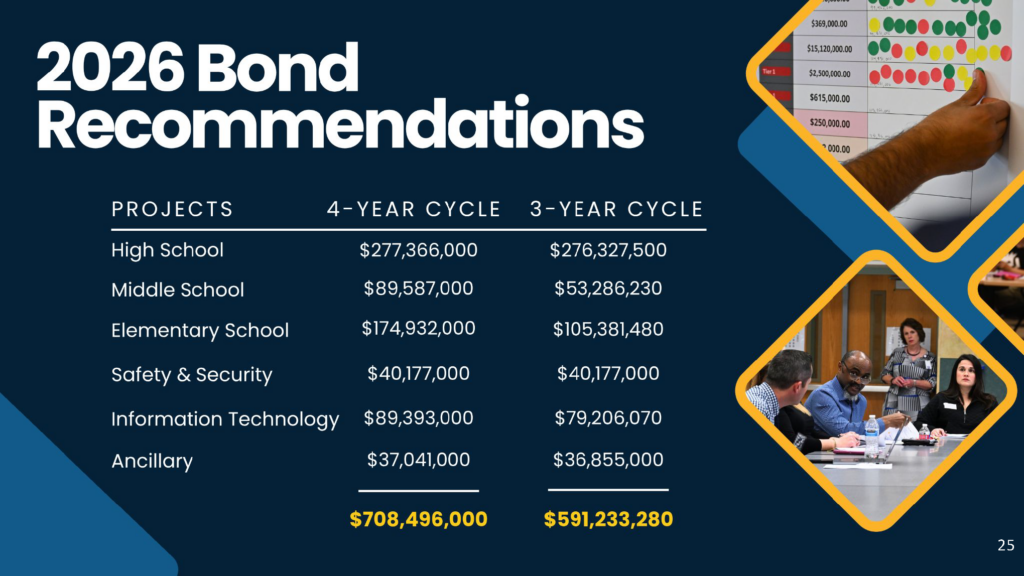
and developing both three-year and four-year implementation options.
Focus on Maintaining Existing Schools
The committee recommendations are centered primarily on maintaining and modernizing existing facilities rather than constructing new campuses:
Among the needs discussed were:
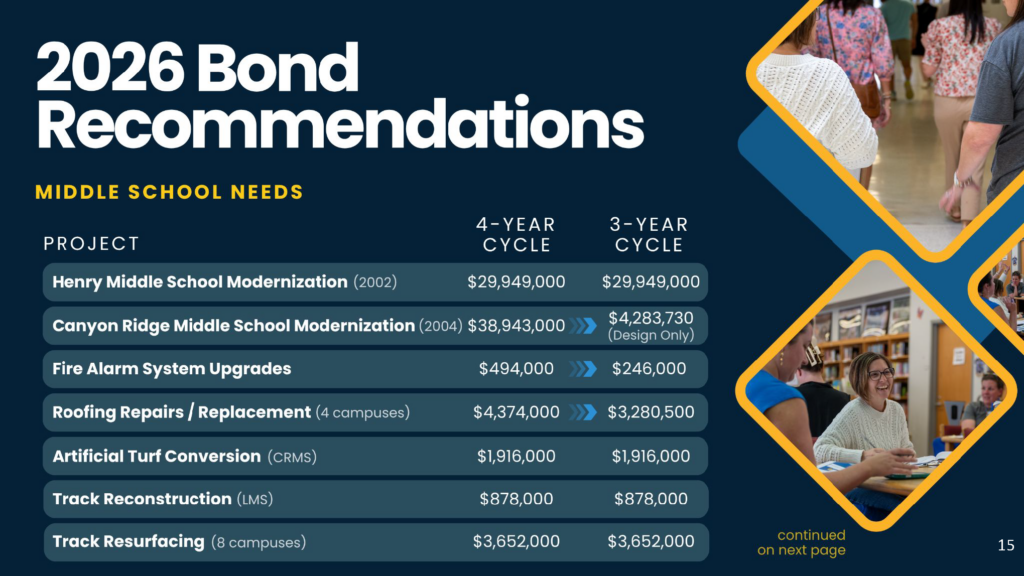
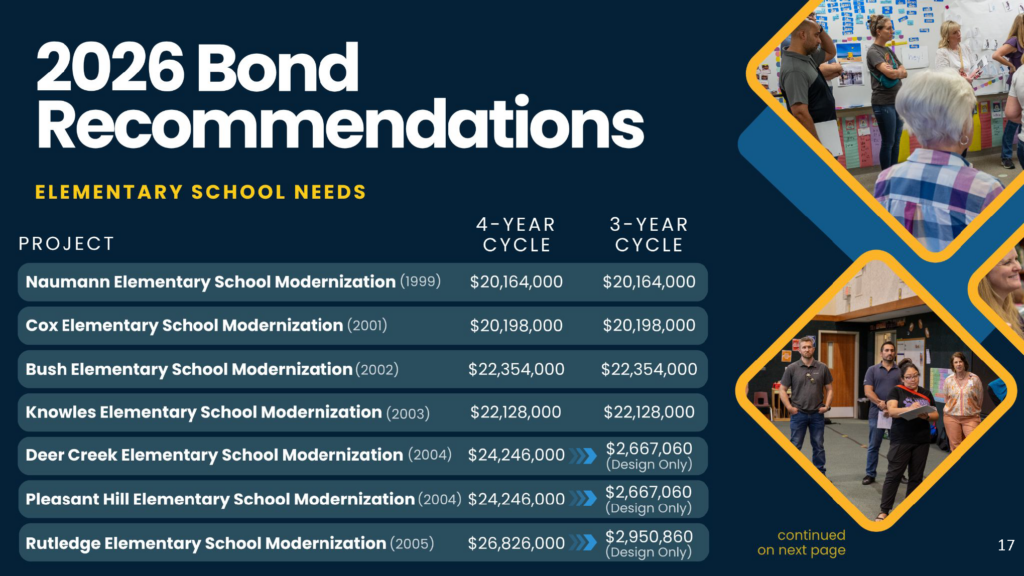
- Modernizing elementary and middle schools where building systems have reached the end of their useful life.
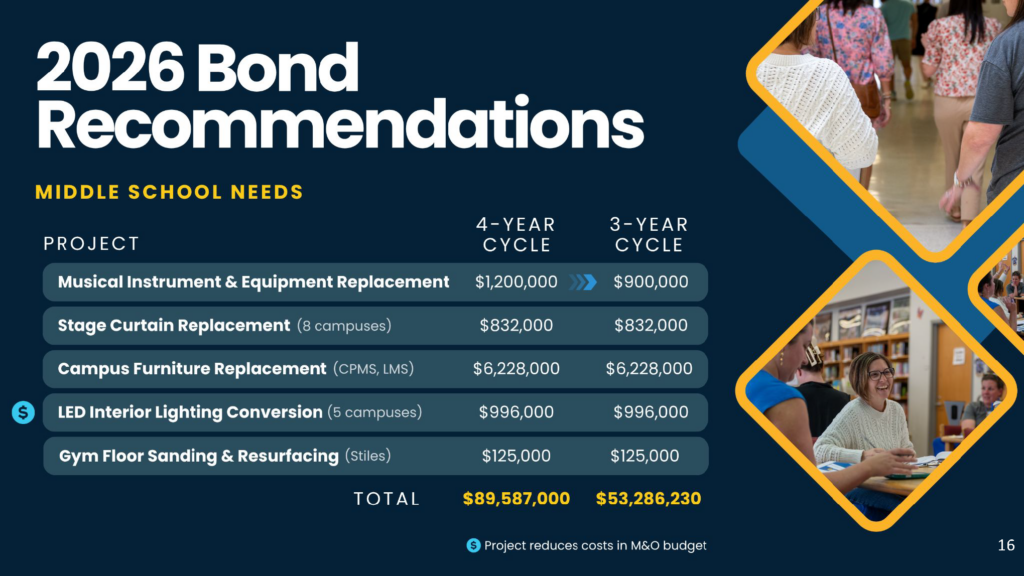
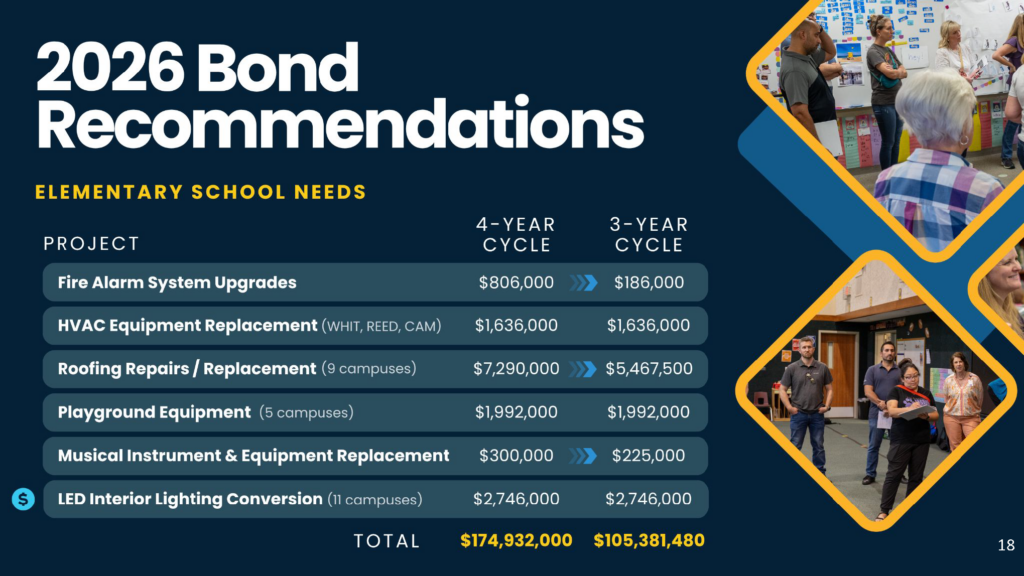
- HVAC, fire alarm, roofing replacements.
- Safety and security improvements, including security cameras, access control and emergency communications.
- Student technology replacements.
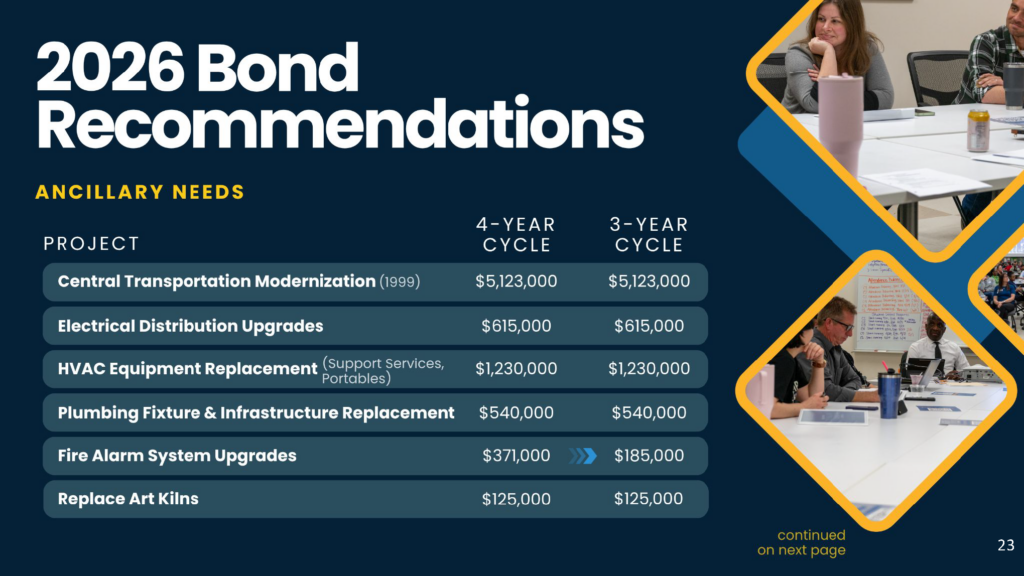
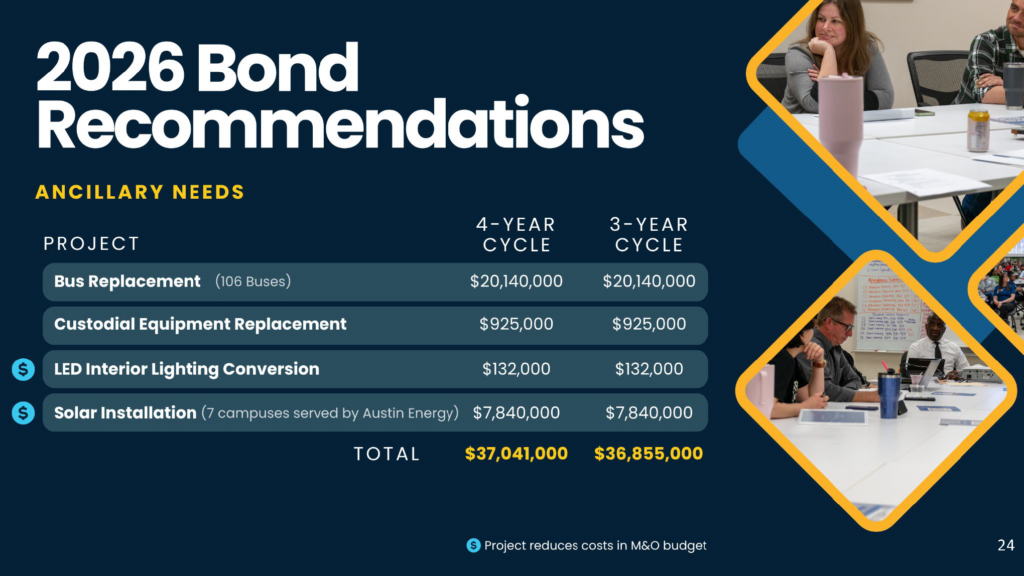
- Bus fleet replacement to meet upcoming state seat belt requirements.
- Energy efficiency projects designed to reduce future operating costs through LED lighting and solar installations.
- Athletics, Fine Arts and Career & Technical Education (CTE) equipment replacement.
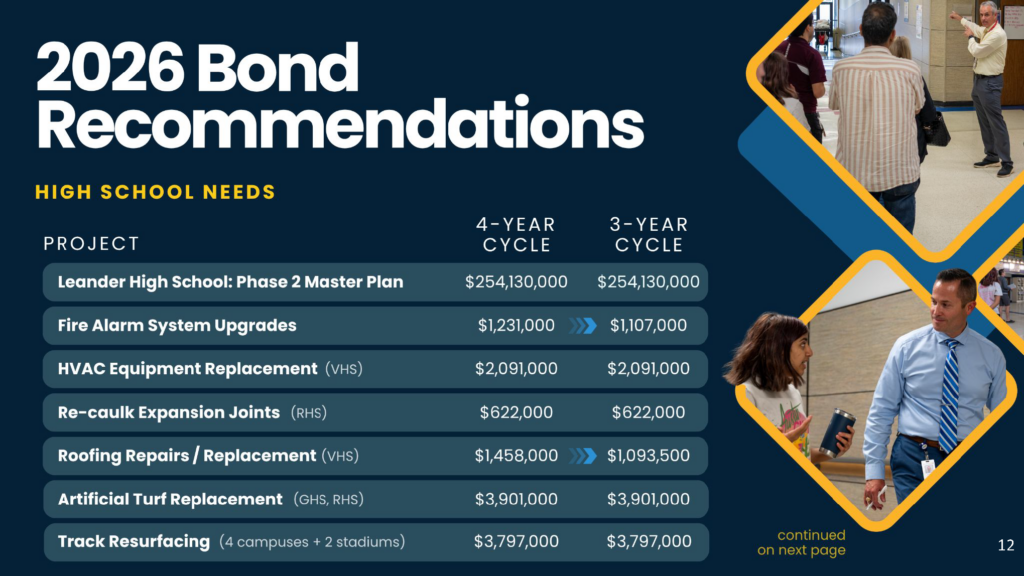
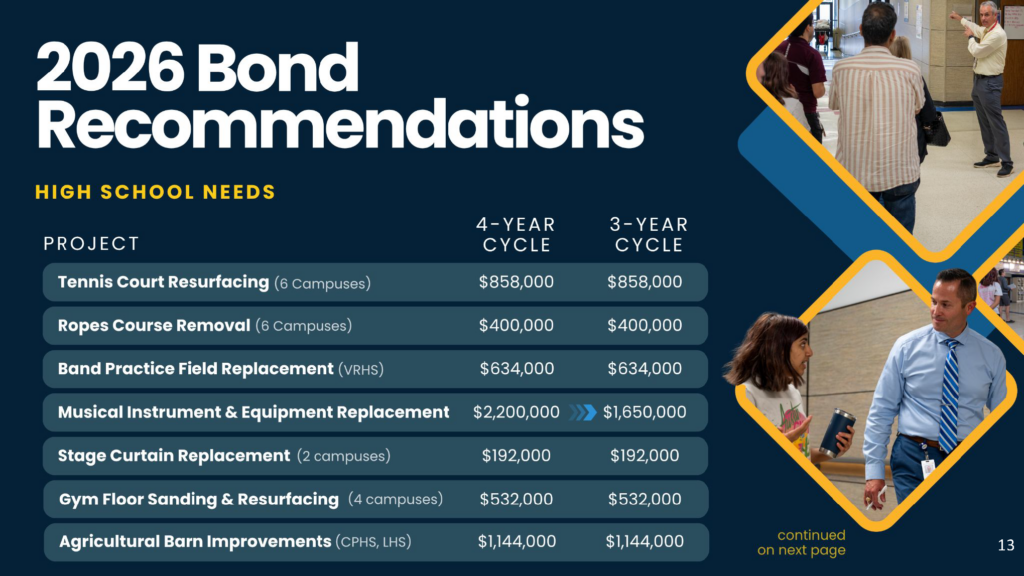
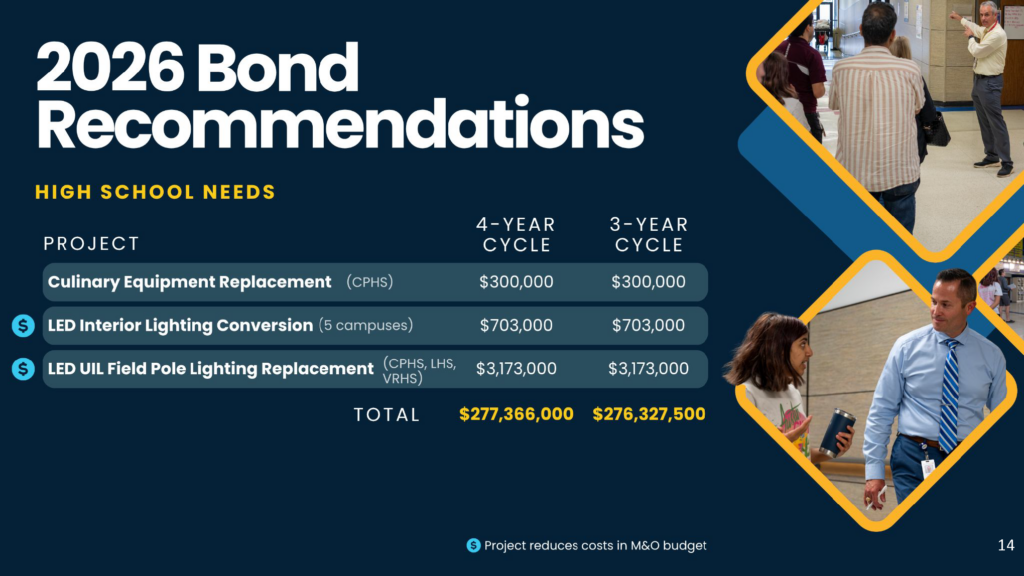
High School
Middle School
Elementary School
Safety & Security
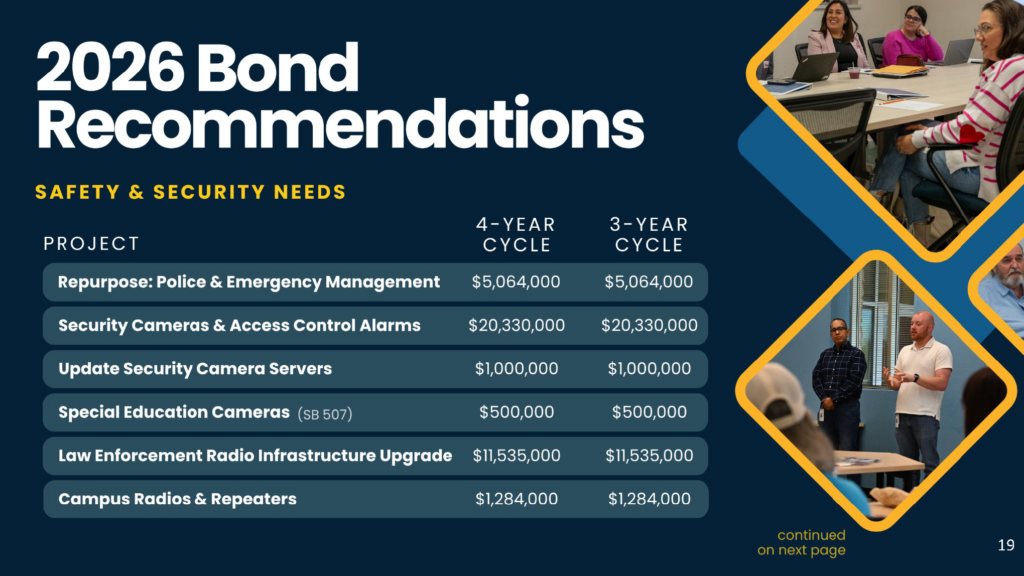
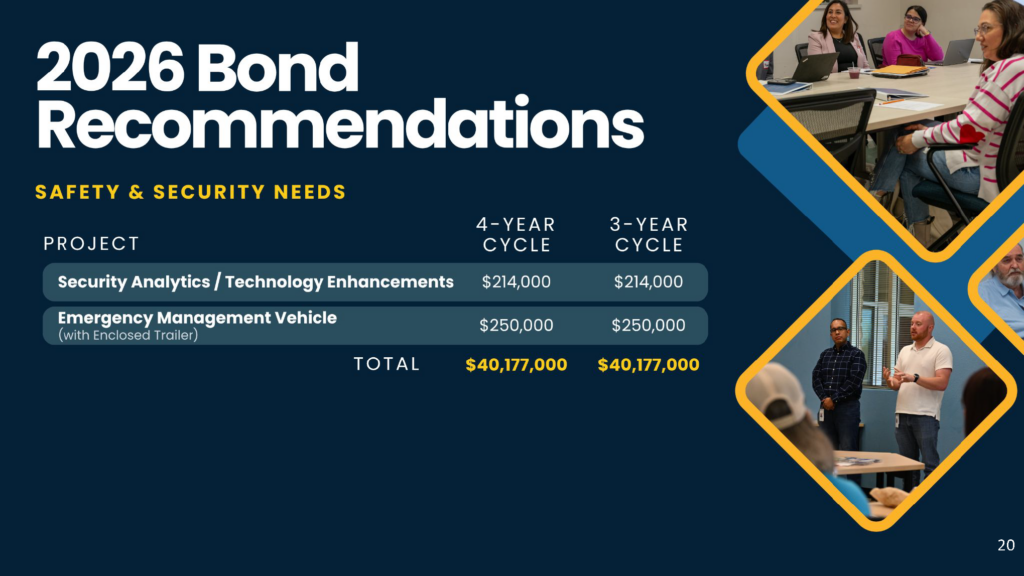
Information Technology Services
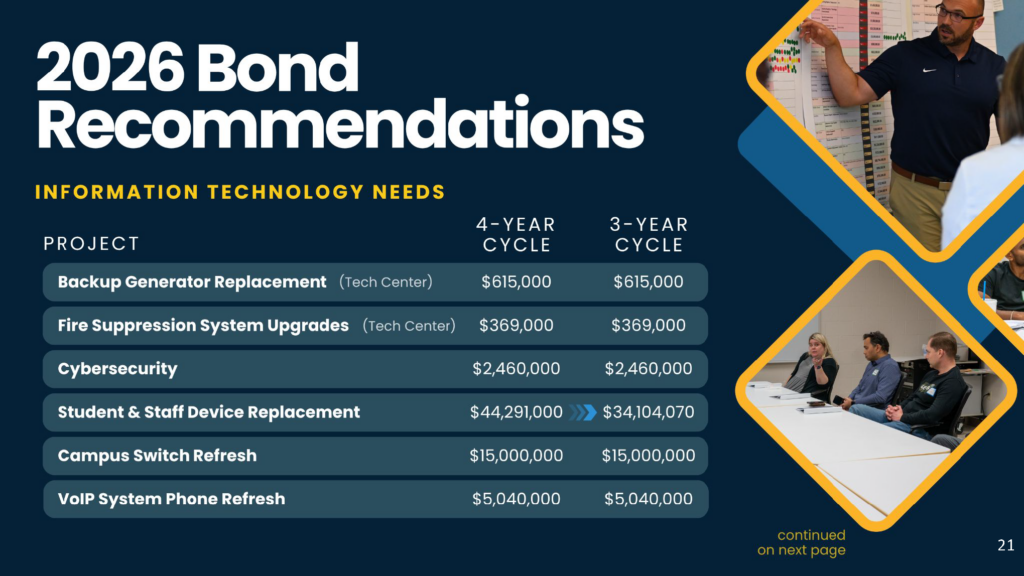
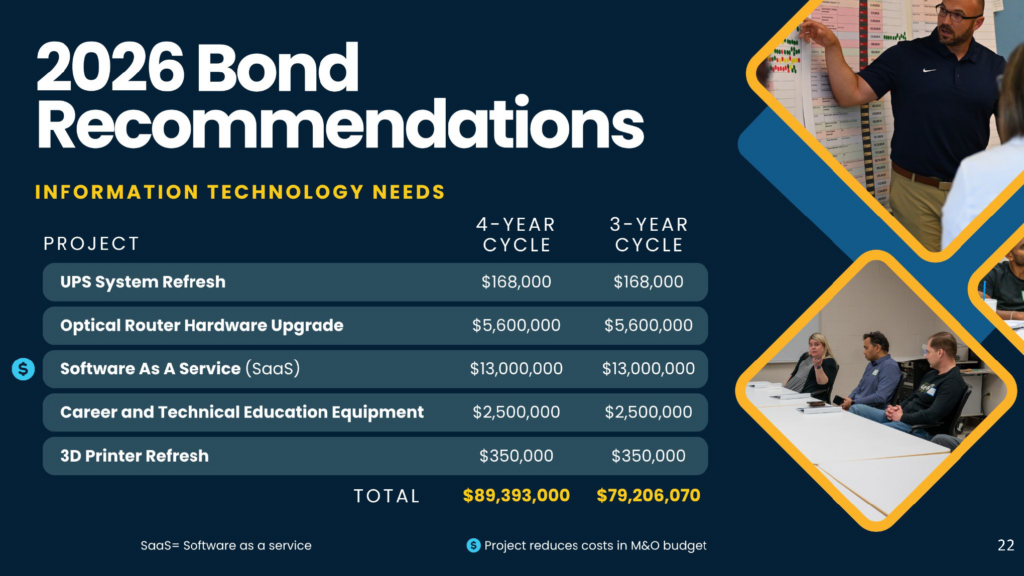
Ancillary
Reviewing Financial Considerations
Following the committee presentation, district financial advisors discussed how a potential bond could be financed and how different timelines may affect project costs.
Financial advisors estimate that funding the proposed bond recommendation could require an approximately 6-cent increase to the district’s Interest & Sinking (I&S) tax rate, moving it from 33 cents to approximately 39 cents per $100 of taxable property value. The additional I&S revenue would be dedicated to paying debt associated with voter-approved bond projects and could not be used for salaries or other day-to-day operating expenses.
Voter-Approval Tax Rate Election (VATRE): A Preview for Aug. 6 Board Meeting
Trustees continued discussing a possible VATRE as a separate conversation focused on supporting the district’s operating budget. District leaders reiterated that the bond and VATRE serve different purposes and require separate consideration.
The proposal could include the district’s three remaining copper pennies, generating approximately $12 million annually. Because Leander ISD is subject to recapture, the district would retain an estimated $6.7 million, or about 56% of the total revenue collected. Board members asked for additional information about how the revenue could be used, what has changed since the district’s previous VATRE and how the district’s recent budget reductions and increased operating costs factor into the decision.
What Happens Next?
The Board has not decided whether to place a bond or VATRE on the November ballot.
Trustees are expected to continue discussions in August, with additional information and community feedback helping guide any future decisions. If the Board chooses to call a November election, state law requires that action be taken by the August election deadline.
The district will continue sharing information with the community throughout the process to help residents understand the identified facility needs, the recommendations developed by the Citizens’ Facility Advisory Committee and the financial considerations associated with any potential election.
