

During its Oct. 29 meeting, the Board of Trustees agenda included:
- Annual Demographic Report Highlights Stabilizing Overall Enrollment, Shifting Growth
- Board Begins Work on 2027–31 Strategic Plan
- Board Approves Targeted Improvement Plans for 3 Elementary Schools
The Board’s next regular meeting will take place Thursday, Nov. 19, 2026.
Annual Demographic Report Highlights Stabilizing Overall Enrollment, Shifting Growth
🎬 5.B. Discussion of the Annual Demographic Report: Population & Survey Analyst (PASA)
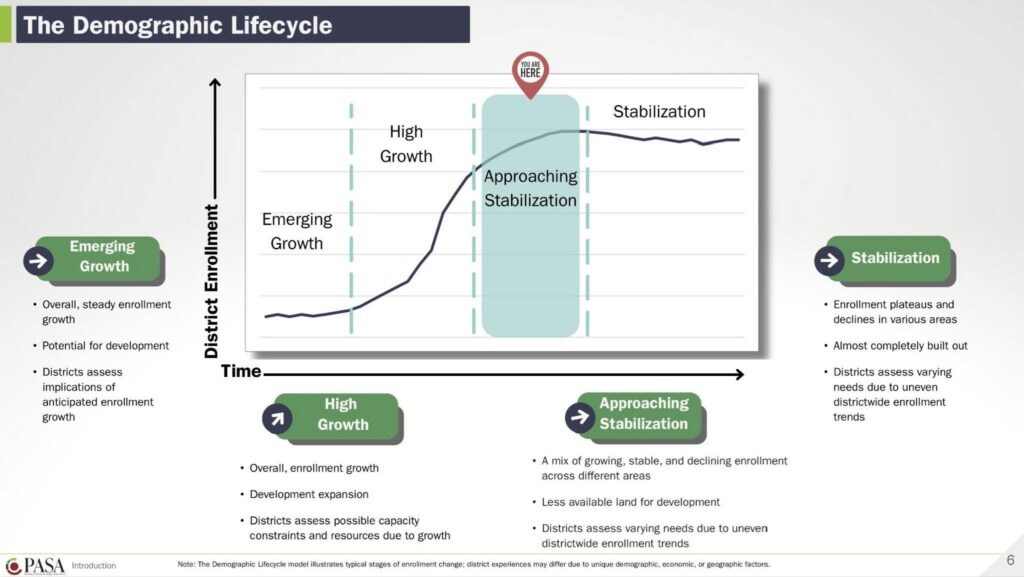
Representatives from Population and Survey Analysts (PASA) presented Leander ISD’s annual demographic update, a key planning tool that examines enrollment trends, housing development and how student populations are shifting across the district.
As of Fall 2026, Leander ISD serves approximately 41,100 students, down roughly 700 students from last year.The second consecutive year of enrollment decline reinforces PASA’s assessment from the previous year that the district has moved beyond its high-growth years and is approaching stabilization, with overall enrollment projected to remain relatively steady over the next decade.
However, this districtwide trend does not reflect uniform conditions across all areas. New housing development and student growth are increasingly shifting toward the north, northwest and east, while many established areas in the south and central portions of the district are largely built out and experiencing stable or declining student populations. These varying enrollment patterns remain important considerations in the district’s ongoing planning efforts.
Several factors are shaping that outlook:
- Fewer students per household
The average number of LISD students generated by single-family homes has continued to decline, from approximately 0.65 students per home a decade ago to 0.46 today. New housing is also generating fewer students than older, established neighborhoods. These trends reflect a combination of evolving factors, including changing household demographics, family sizes, housing affordability, neighborhood life cycles and the increasing availability of alternative educational choices, all of which influence enrollment patterns across the district.
- Smaller incoming classes
For the first time, LISD’s kindergarten class is smaller than the number of children born within the district five years earlier. PASA noted that this reflects a combination of changing family patterns and more families choosing educational options outside the district.
- More educational choices
Charter, private, homeschool and neighboring-district options continue to affect enrollment. PASA estimates that the share of school-age children living within LISD boundaries who attend LISD schools declined from nearly 89% in 2024 to about 87% in 2025, before the opening of the BASIS Leander Charter School this fall.
- Housing growth continues, but at a changing pace and location
PASA projects approximately 26,200 new housing occupancies over the next decade. Much of that future growth is expected farther north, northwest and east as southern portions of the district approach buildout. Higher construction costs, interest rates, infrastructure availability and other development constraints are also contributing to a slower, more traditional development timeline.
The result is an increasingly complex planning picture: While LISD has available capacity districtwide, that capacity does not always align with where student growth is occurring. Program locations, student transfers and families’ educational choices further influence enrollment at individual campuses. An important consideration is that students currently pursuing alternative educational opportunities remain part of the broader community and may choose to enroll in LISD schools in the future. While long-range planning cannot assume all of these students will return, it must recognize the potential for enrollment patterns to shift and account for the associated capacity needs. Enrollment choices may change over time, but the district’s responsibility to plan for the students and communities it serves remains. These factors are important considerations as the district evaluates future facilities, programs and attendance boundaries.
These demographic trends will also help inform Leander ISD 2037, the district’s ongoing 10-year planning effort examining how enrollment, facilities, finances, staffing and programs should evolve together. Families, staff and community members can help shape that work by completing the Leander ISD 2037 survey.
Board Begins Work on 2027–31 Strategic Plan
🎬 5.A. Discussion of MoakCasey: 2027-2031 LISD Strategic Planning
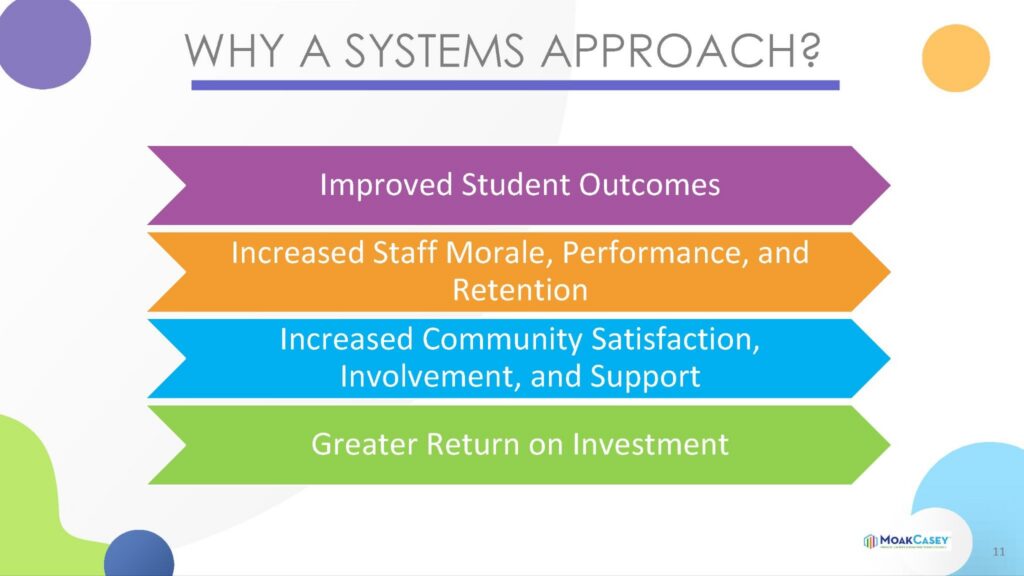
Trustees began work on Leander ISD’s next five-year strategic plan, designed to establish shared priorities and create a clearer connection between the district’s long-term direction and the work happening throughout the organization.
The district is currently in the final year of implementing its existing five-year strategic plan, with progress monitored through district improvement plans over the past five years. Working with MoakCasey, the Board is developing the 2027–31 Strategic Plan, incorporating existing Board goals, district priorities, strategic initiatives and lessons learned into a more unified framework. The process will bring greater clarity and structure to priorities, strategies, measurable outcomes and ongoing progress monitoring. The goal is to establish a strategic plan that serves as an anchor document, connecting long-term priorities to district and campus improvement plans while guiding the district’s work over the next five years.
Trustees also discussed their role in setting long-term direction while administration develops and implements the strategies needed to reach those goals.
While the strategic plan will guide the district’s broader organizational priorities and actions, it serves a different but complementary purpose to Leander ISD 2037, the district’s 10-year planning effort supported by Civic Solutions Group. Leander ISD 2037 focuses on future enrollment, educational programs, facilities, resource utilization and long-term sustainability, while the strategic plan provides a framework for aligning districtwide priorities with measurable goals and implementation efforts. Together, these planning processes will help connect the district’s near-term actions with its longer-term needs and direction.
Community input is one of the next steps. LISD will host three Strategic Plan Community Engagement Sessions in November to gather perspectives on the district’s strengths, opportunities and priorities for the future. Feedback from community members, staff and Trustees will help shape the plan as it continues to develop.
Board Approves Targeted Improvement Plans for 3 Elementary Schools
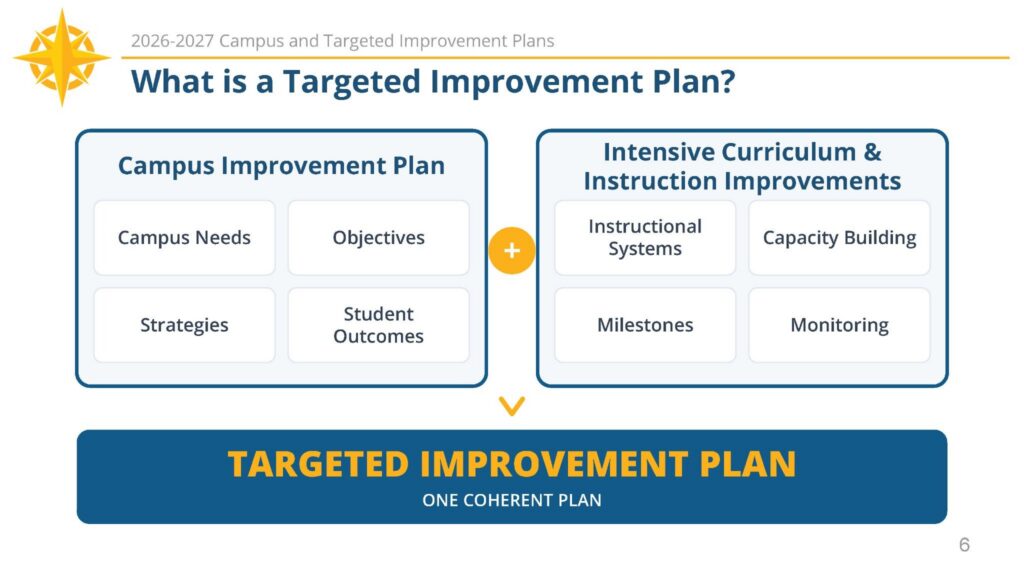
Trustees approved 2026–27 Campus Improvement Plans and Targeted Improvement Plans for Bagdad, Camacho and Knowles elementary schools following their identification for additional support through state and federal accountability systems.
The targeted plans build on each campus’s existing improvement plan with additional focus on curriculum and instruction, professional learning communities, student-level progress monitoring, teacher coaching and support for special education and students learning English. Campus and district leaders will review implementation and student progress throughout the year, including monthly milestone monitoring and quarterly data reviews.
During the discussion, Trustees emphasized monitoring whether the additional strategies are improving student outcomes while also considering their impact on teachers and campus staff. District leaders said some of the instructional practices being strengthened at these campuses will likely ultimately help inform improvement efforts across LISD.
